
Density Tower
A density tower is made by stacking several liquids in one container according to differences in density (mass per unit volume).
Liquids with higher density sink to the bottom, while liquids with lower density float on top.
For example, if the following liquids are used:
- Ethanol (about 0.79 g/mL)
- Cooking oil (about 0.91 g/mL)
- Water (1.00 g/mL)
- Glycerin (about 1.26 g/mL)
- Mercury (about 13.6 g/mL)
They will form layers from top to bottom in the following order:
Ethanol → Cooking oil → Water → Glycerin → Mercury
In other words, the lightest ethanol is at the top, and the heaviest mercury is at the bottom.
When plastics or metals are placed in this density tower, each material will float or sink depending on its own density.
From this, we can discover the following interesting facts:
- There are many different types of plastics, and their densities are slightly different.
- Iron floats on mercury.
- Although both are metals, gold sinks even in mercury.
Various Types of Plastics
| Representative Image | Plastic (Abbreviation) | Density (g/ml) | Characteristics and Main Uses |
|---|---|---|---|
 |
Polypropylene (PP) | About 0.9 | Excellent heat resistance (about 120–165°C), lightweight properties, and chemical stability. Used for food containers, airtight containers (Lock&Lock), delivery containers, baby bottles, and other kitchen用品 used in daily life. |
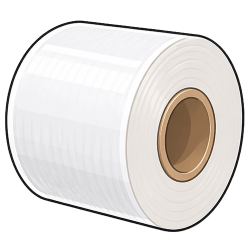 |
Low-Density Polyethylene (LDPE) | About 0.92 | Flexible and transparent, with excellent moldability, impact strength, chemical resistance, and electrical insulation. Used for plastic bags, agricultural/packaging films, and wire coatings. |
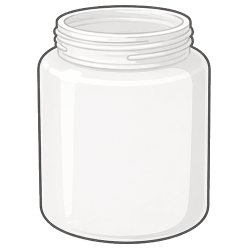 |
High-Density Polyethylene (HDPE) | About 0.96 | Has a milky white semi-transparent appearance and is strong and durable. Used for medicine bottles, milk bottles, industrial containers, pipes, and plastic lumber. |
 |
Polycarbonate (PC) | About 1.21 | A transparent engineering plastic with impact resistance about 150 times stronger than tempered glass and over 30 times stronger than acrylic. Excellent heat resistance, workability, and dimensional stability. Used for CDs, DVDs, soundproof walls, automobile parts, appliance cases, medical devices, and protective equipment. |
 |
Polyethylene Terephthalate (PET) | About 1.36 | High transparency, strength, and hardness, while being lightweight and having excellent chemical resistance and gas barrier properties. Used for beverage bottles, food containers, films, and textile fibers for clothing. |
 |
Polyvinyl Chloride (PVC) | About 1.37 | Excellent durability, chemical resistance, flame resistance (self-extinguishing), and low cost. Depending on whether plasticizers are added, it can be processed into hard rigid forms (pipes, window frames) or flexible soft forms (hoses, films). Used for construction materials, pipes, wire coatings, artificial leather, and toys. |