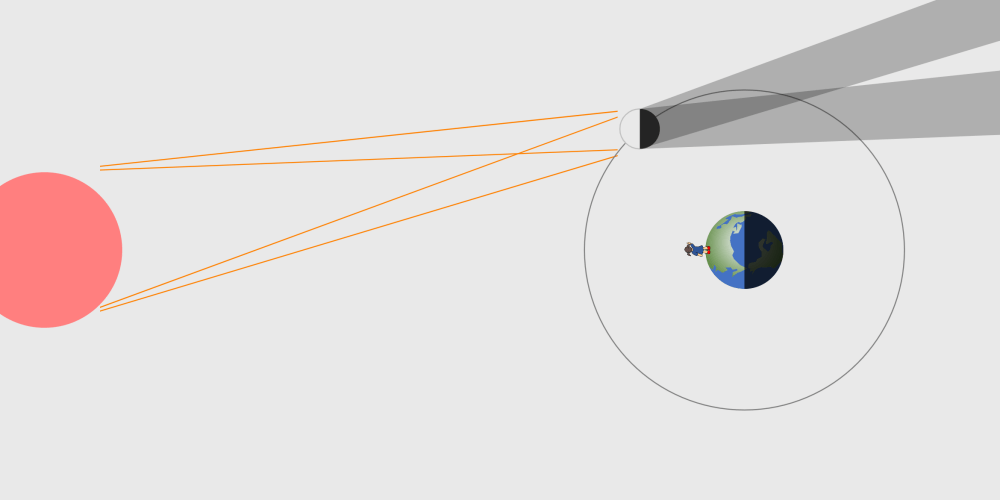
Solar and Lunar Eclipses
How to Use the Simulation Adjust “Speed” to change the Earth’s rotation speed and the Moon’s orbital speed. Drag the screen to change the Moon’s position along its orbit. Adjust “View rotation” … more

Science simulation, Probeware, Coding
How to Use the Simulation Adjust “Speed” to change the Earth’s rotation speed and the Moon’s orbital speed. Drag the screen to change the Moon’s position along its orbit. Adjust “View rotation” … more

What would happen if you brought a mercury barometer to Earth, the Moon, Mercury, Venus, and Mars? Here, we assume that the mercury barometer has a U-shaped tube: one side is open, … more
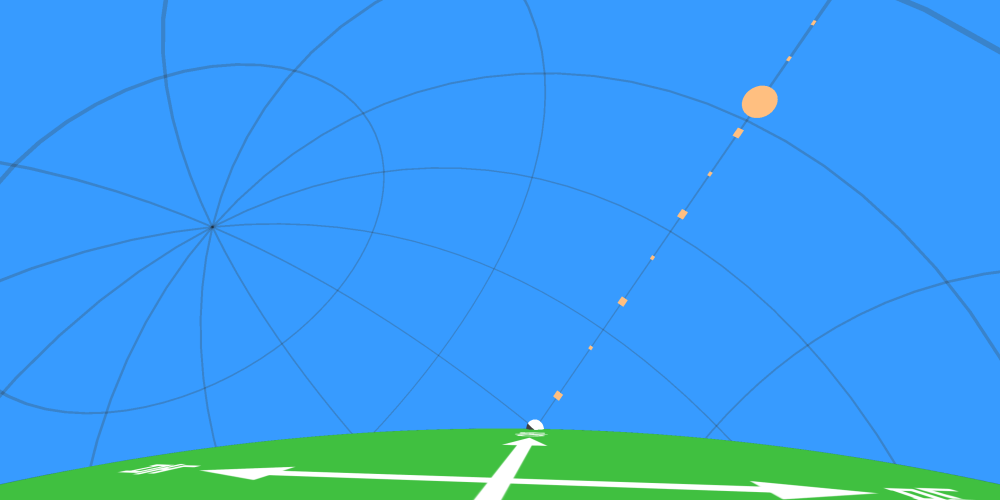
* If you are asked to access your location, please allow it. * Your personal data is not stored on the server. * For iOS devices, please allow location access as follows. … more
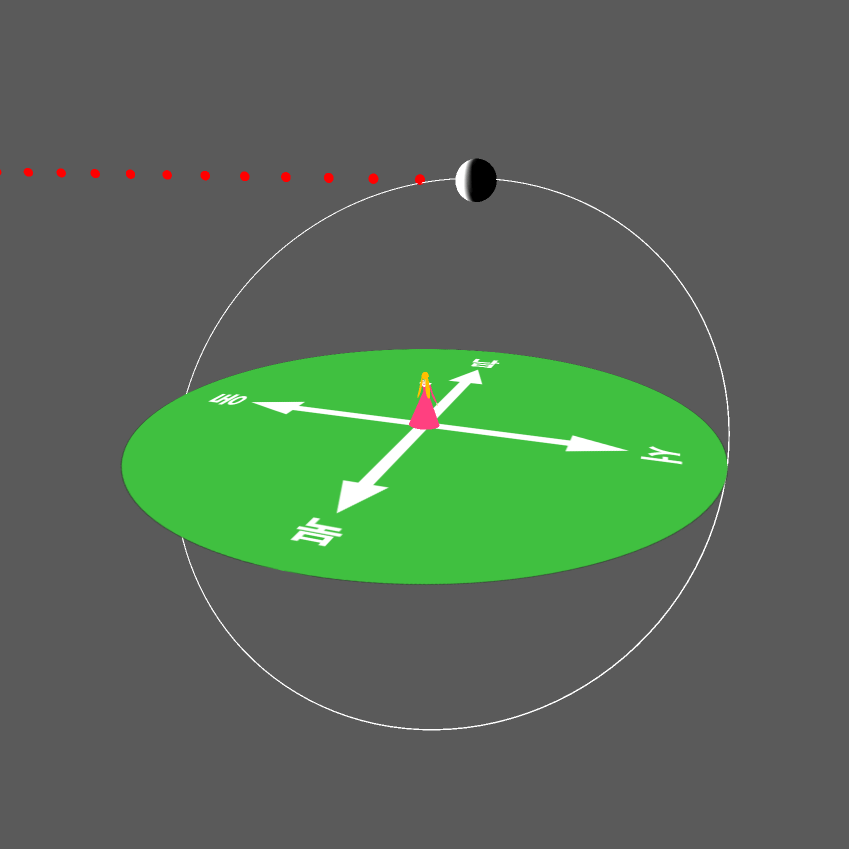
* If you are asked to access your location, please allow it. * Your personal data is not stored on the server. * For iOS devices, please allow location access as follows. … more
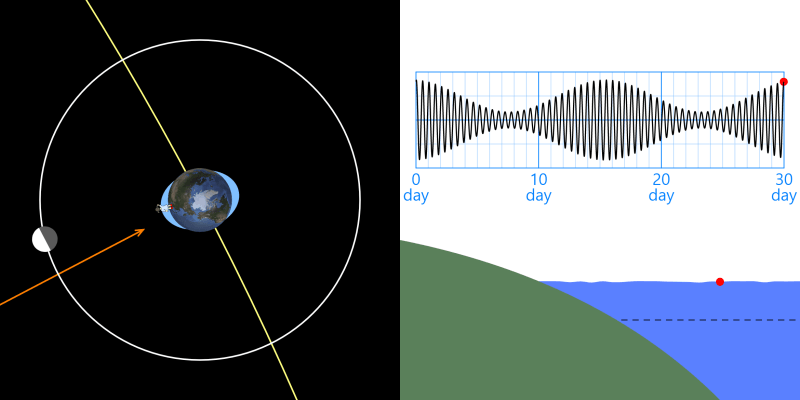
Tides Tides are the periodic rise and fall of sea level observed along coastlines. The force responsible for tides is called the tide-generating force. It arises primarily because the gravitational forces exerted … more

The photographs of the Earth and the moon close together that you can see on posters, etc., are designed to be easy to see. The moon’s apparent diameter is only about 0.5˚. … more
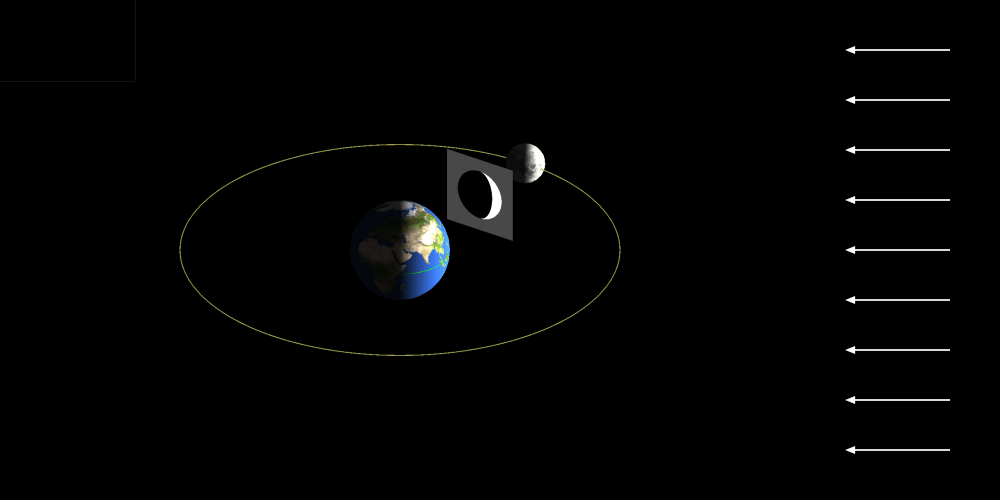
It is only the sun that shines by itself in the solar system. Earth and moon do not emit light themselves. The earth and the moon only reflect the light of the … more
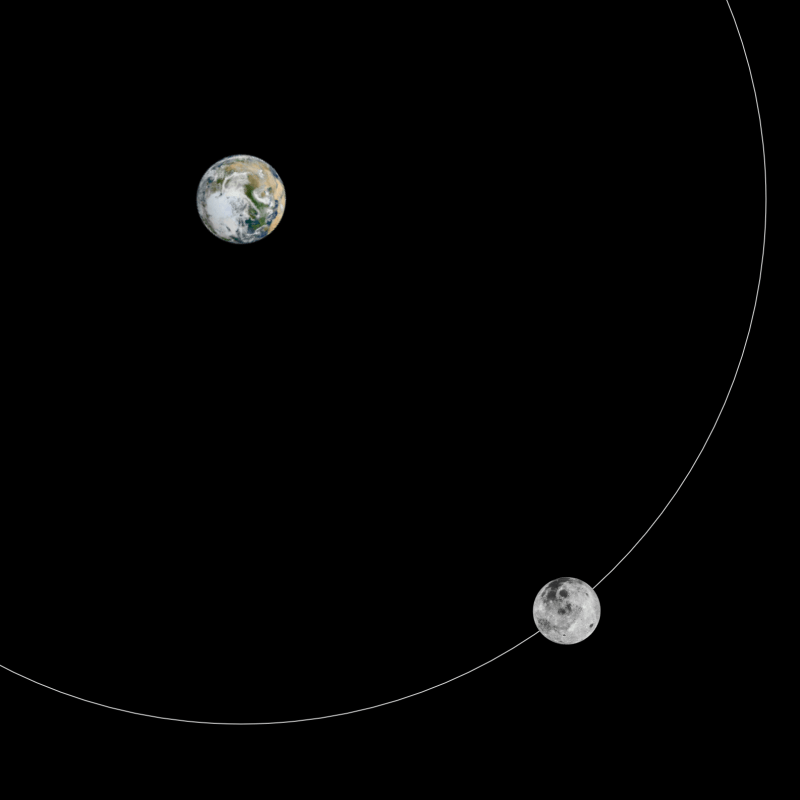
Why do we always see the same side of the moon? The moon’s rate of rotation and rate of revolution is the same.

Is the moon really following me? How can you explain that the moon looks follow I? The moon doesn’t follow me. For example, if I go forward with a car, the landscape … more

Tidal force Earth is not an object like a point (· ), but a rigid body (●) with a certain volume, so the gravity applied to each part is slightly different. This … more
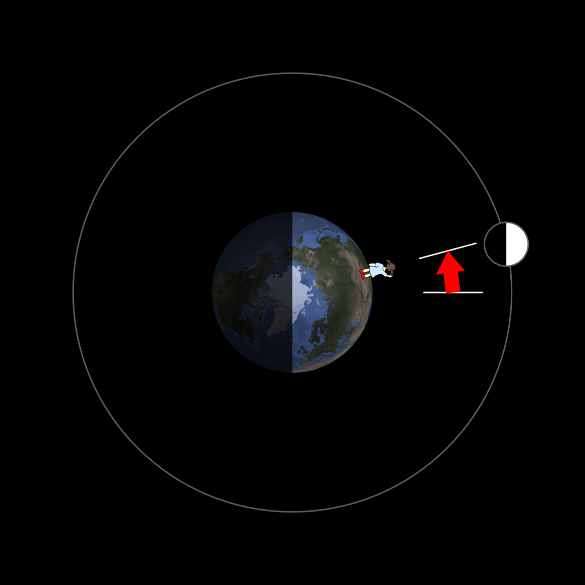
The reason why the moon rises 50 minutes late every day While the Earth rotates once a day, the Moon moves to the east little by little. So it takes 50 minutes … more