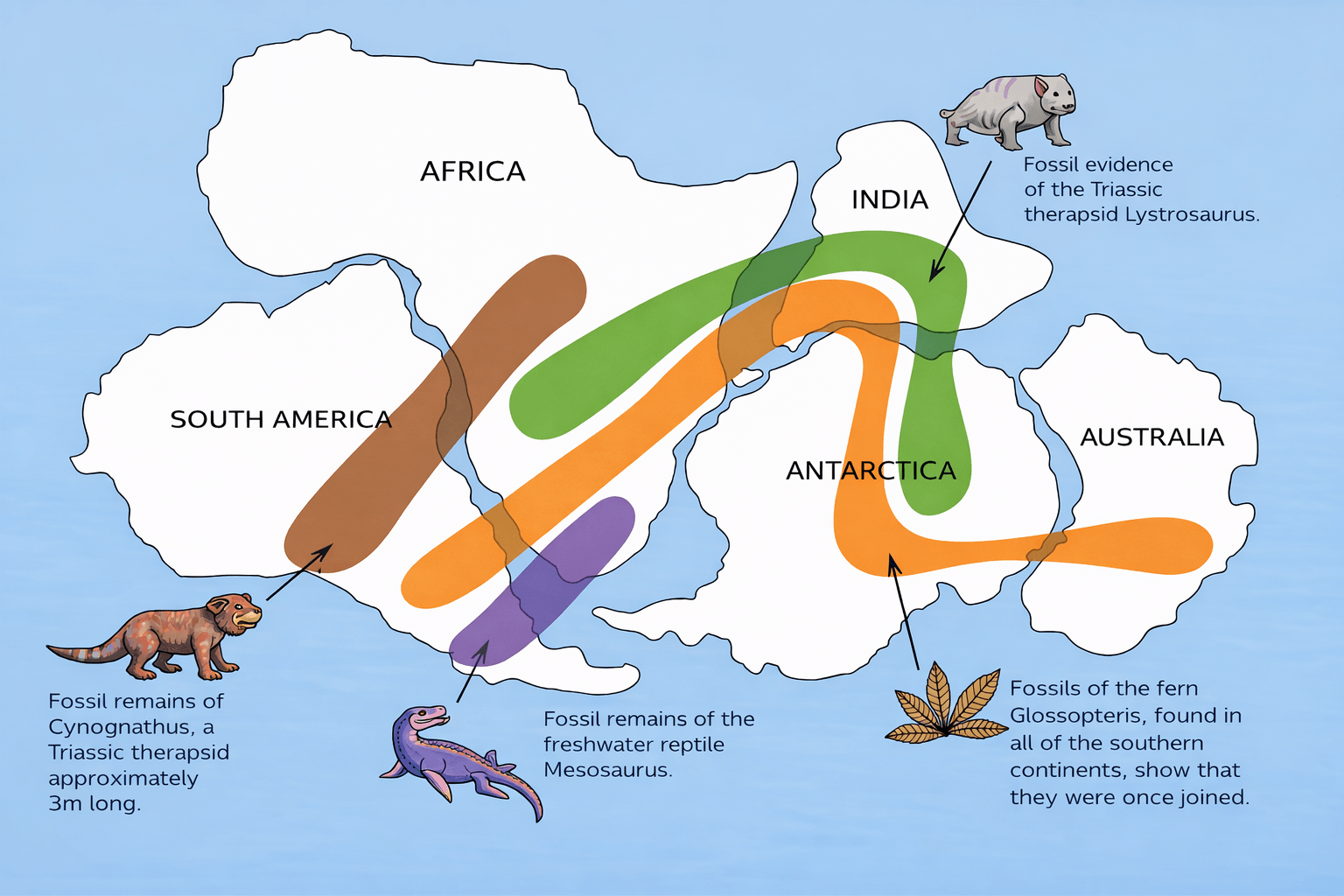



- Move the continents so that the fossil distributions connect into one continuous pattern.
- Can all the continents be joined together into a single landmass?
Distribution of Fossils
The fossils corresponding to each color are as follows.
- A carnivorous land animal
- Found only in South America and Africa
- A fern-like plant (seed fern) that lived from the late Paleozoic to the early Mesozoic
- Widely distributed across South America, Africa, India, Antarctica, and Australia
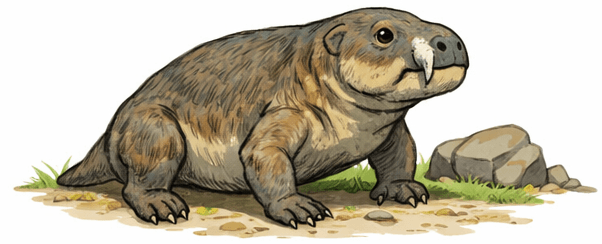
- A herbivorous land reptile (mammal-like reptile)
- Found in Africa, India, and Antarctica
- An aquatic reptile that lived in freshwater
- Found only in South America and Africa
Although these fossils belonged to land or freshwater organisms that could not easily cross oceans, they are found on different continents. This provides evidence that the continents were once joined together as a single landmass in the past.