Mercury Barometers on Different Planets
What would happen if you brought a mercury barometer to Earth, the Moon, Mercury, Venus, and Mars? Here, we assume that the mercury barometer has a U-shaped tube: one side is open, and the other side … more
Science Simulations
What would happen if you brought a mercury barometer to Earth, the Moon, Mercury, Venus, and Mars? Here, we assume that the mercury barometer has a U-shaped tube: one side is open, and the other side … more
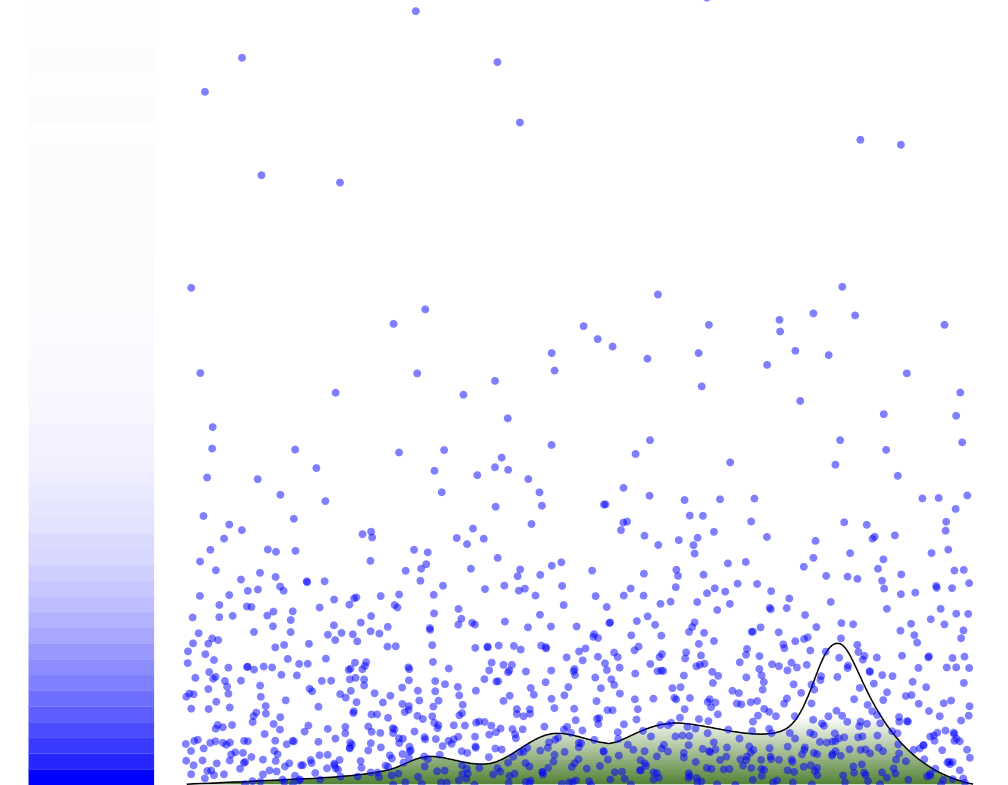
Observe how the density distribution of the atmosphere changes as gravity (gravitational acceleration) is varied. The total kinetic energy of the air particles is assumed to be constant. Gravity is assumed to act uniformly, and no … more
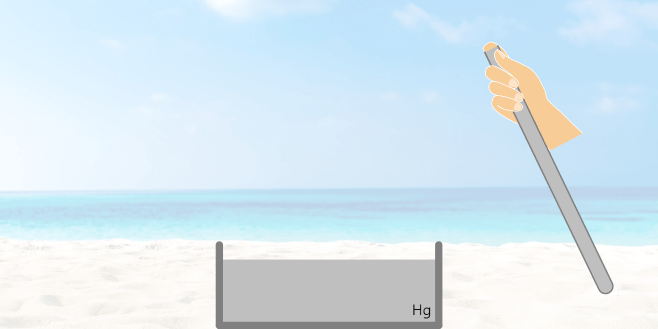
Torricelli’s Experiment The first person to measure the magnitude of air pressure is Italian scientist Torricelli. He was filled with mercury (Hg) in a glass tube with one end blocked. And he stood upside down in … more
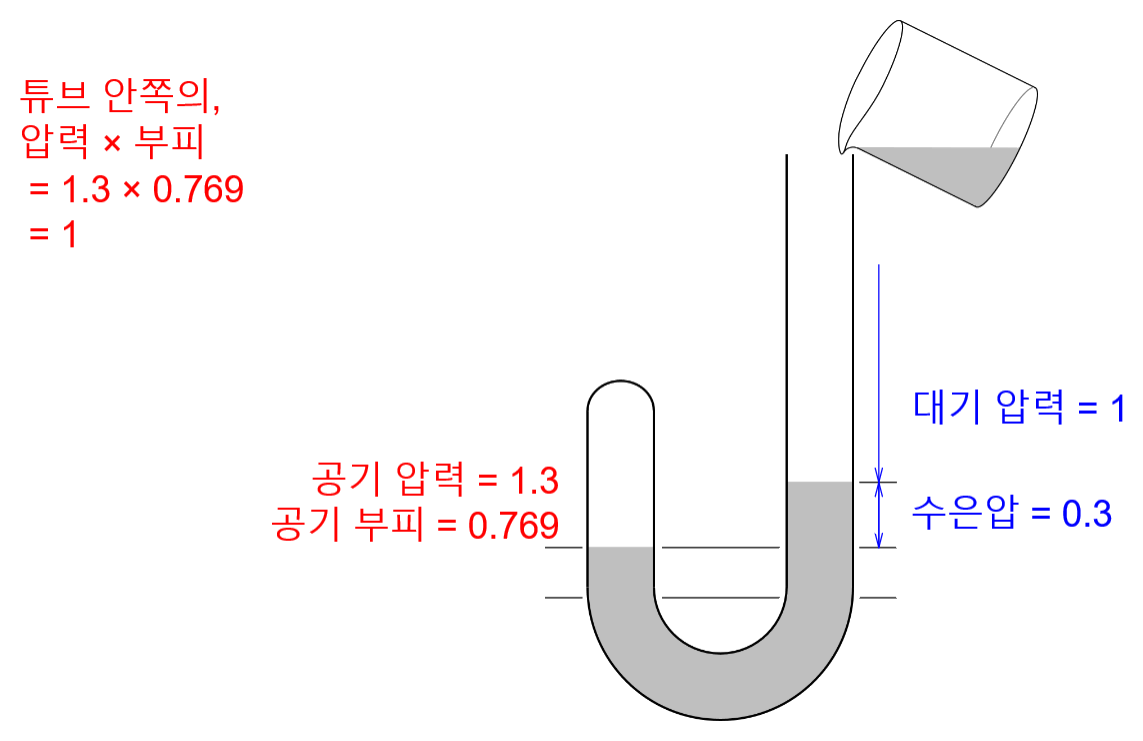
Boyle’s J-tube experiment Boyle’s J-tube experiment is an experiment that Boyle did to prove his law. Boyle experimented with pouring mercury into a J-shaped glass tube with one side blocked. At first, the heights of mercury … more
Assume the pressure inside and outside the balloon is equal at 1 atmosphere. For ease of calculation, the volume and mass of the balloon and string are assumed to be zero. Pressure on a Balloon In … more
Drinks in a straw aren’t pulled, they’re pushed. When we say ‘straw,’ most people picture liquid being sucked upward. But scientifically, that’s not what happens. The liquid doesn’t rise because of suction; it rises because the … more
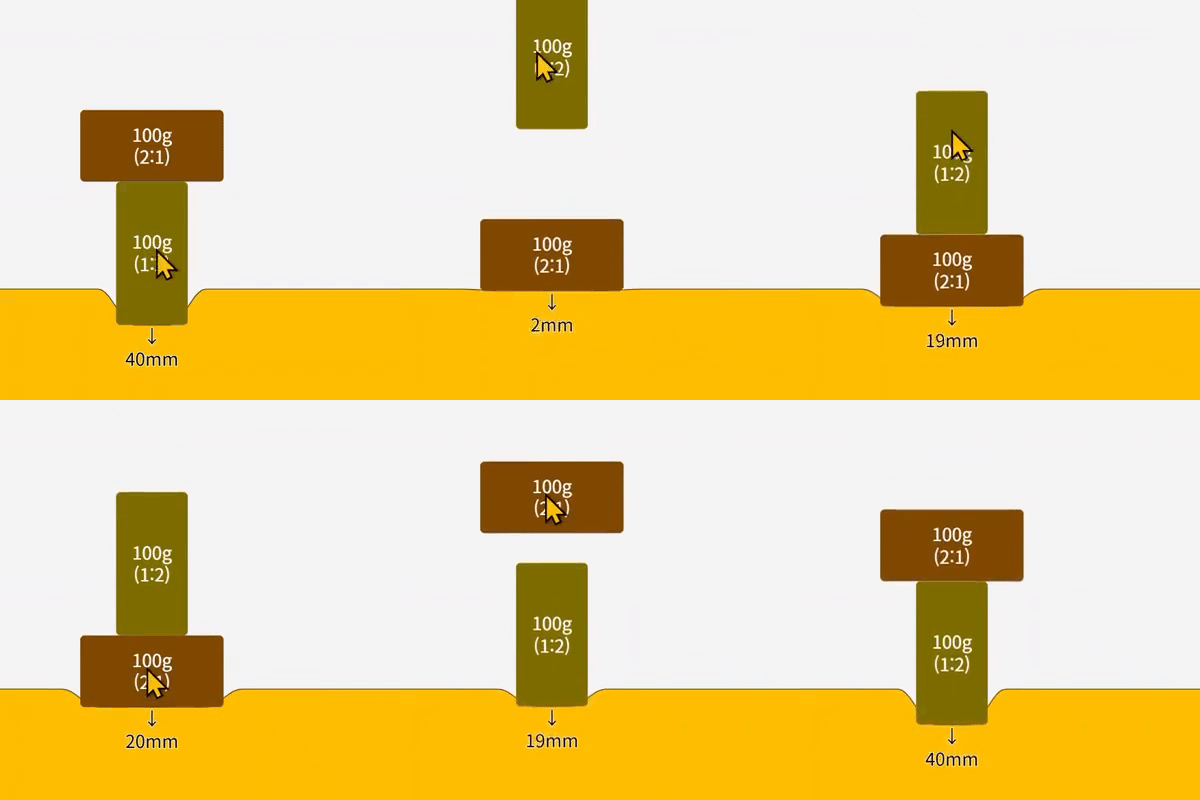
Pressure is defined as the force applied per unit area. When the same force is applied to two different surfaces, the pressure depends on the size of the area: the larger the area, the smaller the … more
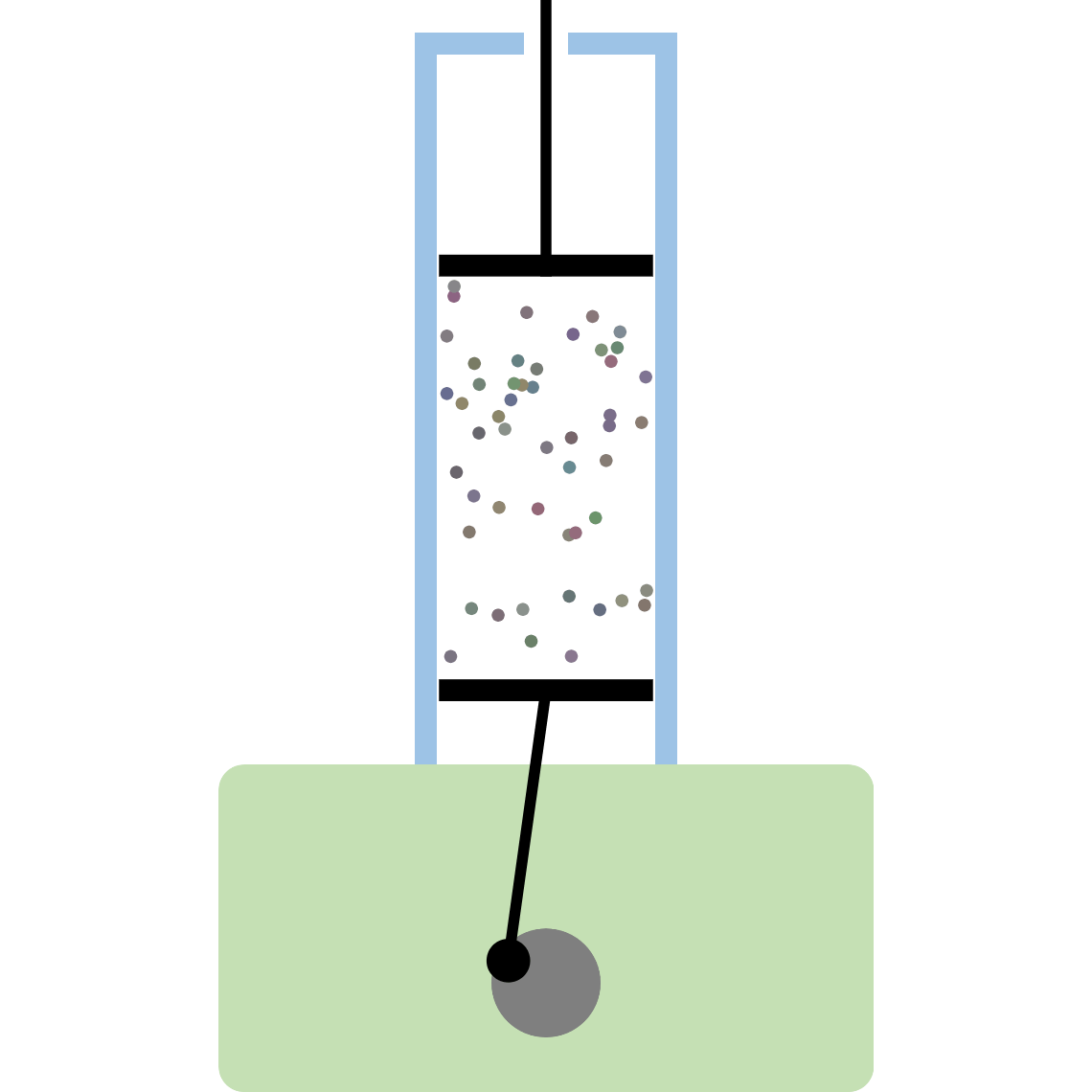
Kinetic theory model Gas particles are constantly moving in all directions. However, we cannot observe these gases because they are very small. The “Kinetic theory model” can replace these invisible gas particles with beads and make … more
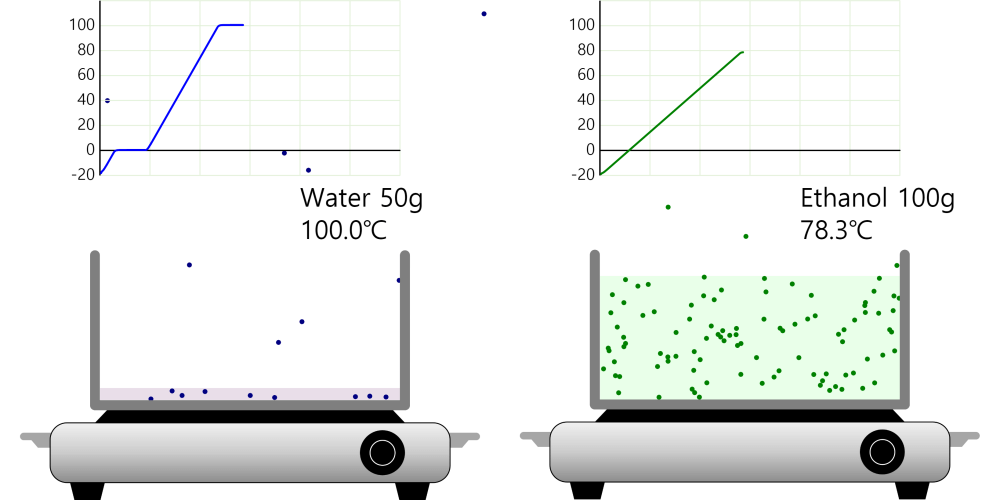
Boiling point and properties of substances All water boils at 100°C when heated, even if it has a different mass. In this way, the same kind of substance has the same boiling point regardless of quantity. … more
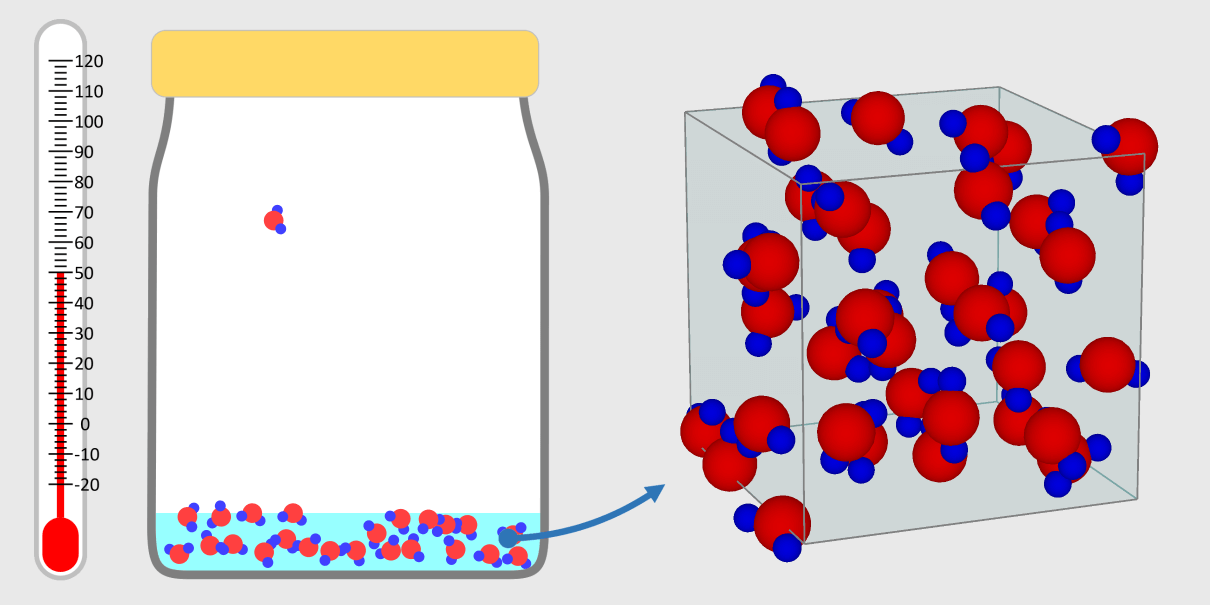
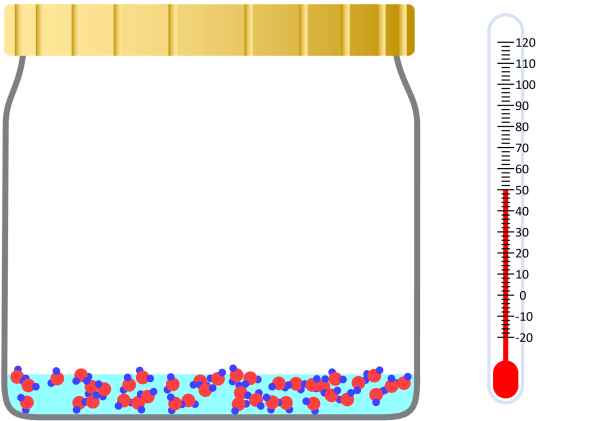
* By adjusting the temperature of the thermometer, you can observe the state of the water corresponding to the temperature. * Depending on the temperature of the water, some water molecules may evaporate. State of matter … more
This simulation supports multitouch. Nature of gas Since the gas can not be seen or touched, a little imagination is needed to understand the ‘nature of the gas.’ In most everyday life, people often do not … more