Astronomy Simulation
Tidal Force
Tidal force Earth is not an object like a point (· ), but a rigid body (●) with a certain volume, so the gravity applied to each part is slightly different. This difference in gravity applies … more
Galilean Moons
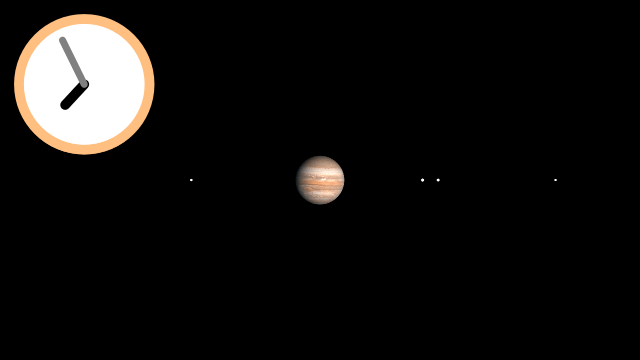
* This simulation refered the link below for Jupiter’s satellite data. https://en.wikipedia.org/wiki/Galilean_satellite Galilean satellite Jupiter, the largest planet in the solar system, has many moons. Jupiter’s representative moons include Io, Europa, Ganymede, and Calisto. These four … more
Path of Satellite
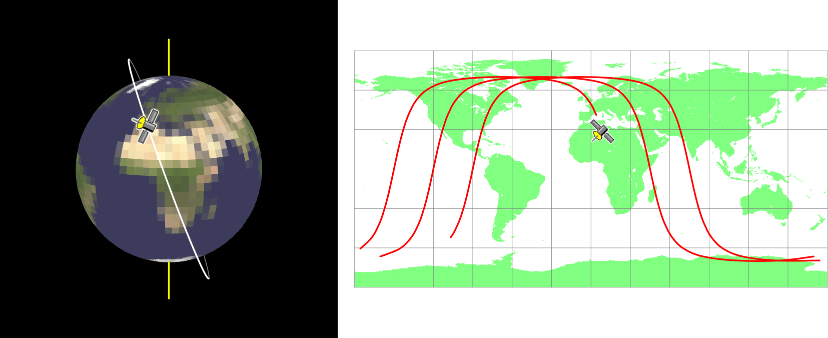
From the perspective of an observer on Earth, the orbits of satellites with an orbiting period of less than 24 hours appear to move westward little by little with each turn. This phenomenon occurs because of … more
Why does the moon rise 50 minutes later each day?
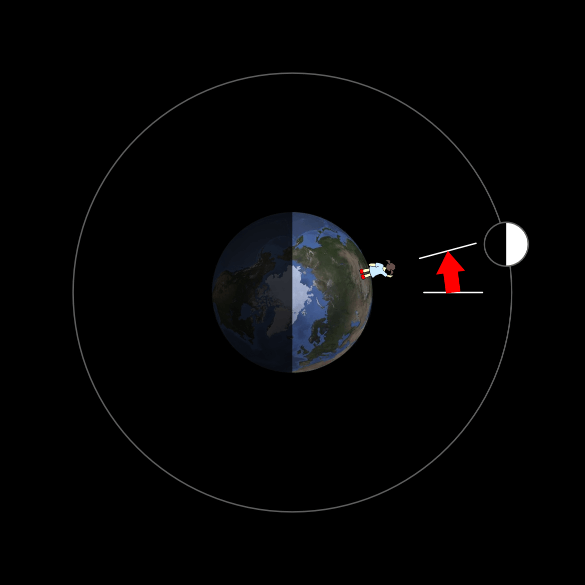
The reason why the moon rises 50 minutes late every day While the Earth rotates once a day, the Moon moves to the east little by little. So it takes 50 minutes to 24 hours for … more
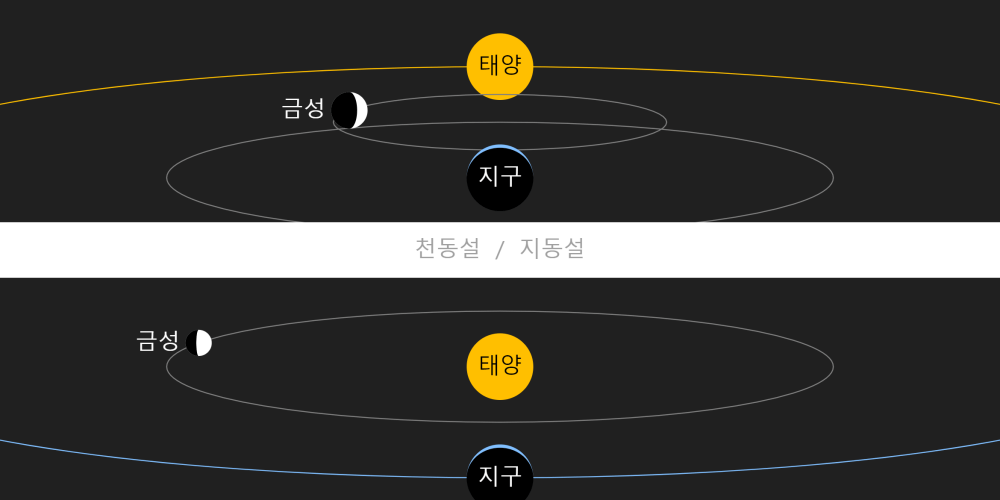
Phase of Venus
Venus’ changes in phase and size are strong evidence of ‘Heliocentrism.’ Venus looks like a crescent moon or a full moon, depending on its angle to the sun. Venus is large when it looks like a … more