Scientific definitions of ‘up’ and ‘down’
We live on the surface of the Earth and are always under the influence of its gravity.
When we let go of an object, it falls “down,” and when we jump, we go “up” and then come back down.
Because the Earth’s gravity is strong and nearly constant for us, the ideas of “up” and “down” develop naturally.
From a scientific point of view, “up” and “down” are not absolute directions fixed in space. Instead, they are relative concepts that depend on the reference point we choose.
For example, what feels like “up” to someone on the opposite side of the Earth would feel like “down” to me.
In summary:
- Up: the direction opposite to gravity
- Down: the direction of gravity, or toward the center of the Earth
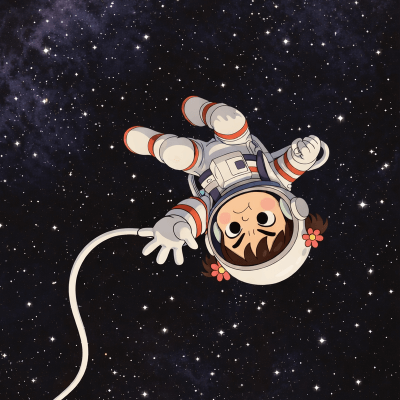
Because gravity is absent in space, there is no natural reference for direction. In principle, this means we cannot define “up” or “down” in space without choosing a reference.